

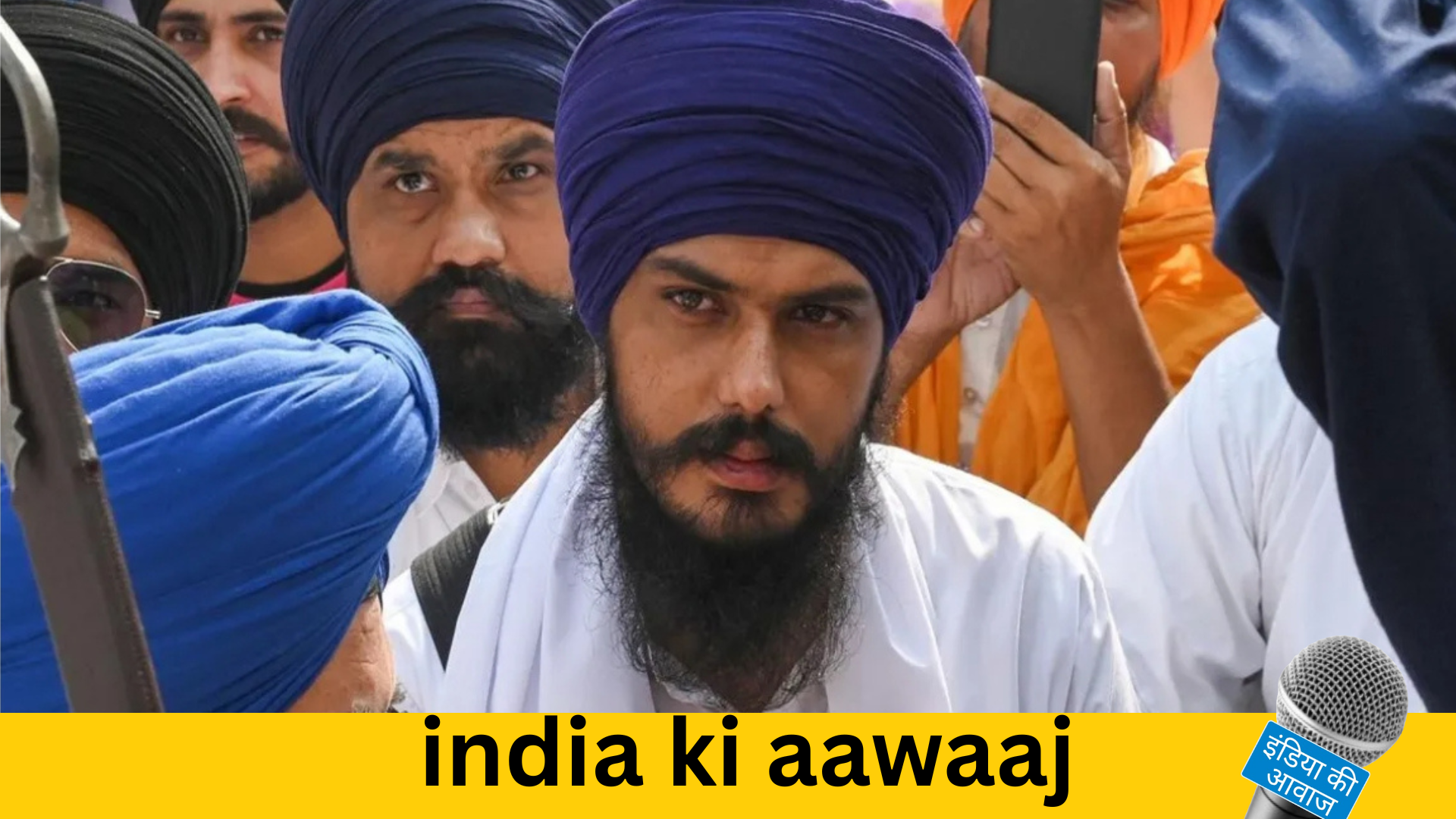
Security is paramount: Why did the Punjab government deny parole to Amritpal Singh?
The Punjab government’s refusal to grant parole to pro-Khalistan leader Amritpal Singh has once again brought to the forefront serious issues related to law and order, national security, and administrative vigilance in the state. The government clarified that this decision was not made under any political pressure, but after a comprehensive assessment of intelligence agency reports, potential law and order crises, and public safety.
This decision concerns not just one individual, but the peace, harmony, and security of the entire state.
Who is Amritpal Singh?
Amritpal Singh has been a controversial figure in Punjab over the past few years. He has come under the radar of national security agencies due to his radical ideology, inflammatory speeches, and alleged anti-national activities. He is accused of using social media and public platforms to incite youth and promote separatist ideas.
He is also reported to have had connections with organizations, both domestic and foreign, suspected of involvement in anti-India activities.
What is parole and on what basis is it granted?
Parole is a provision allowing a prisoner to remain out of prison for a period of time, usually for family reasons, health conditions, or humanitarian grounds. However, granting parole is not a “right,” but a privilege that falls under the government’s discretionary power.
The government considers:
Will the accused’s release pose a threat to society?
Is there a possibility of law and order deteriorating?
Is there a possibility of the accused absconding?
Will his release incite any movement or violence?
Amritpal Singh’s case was also examined against this criterion.
Key Reasons for the Government’s Refusal
- Fear of Law and Order Deterioration
The Punjab government states that Amritpal Singh’s release or parole could lead to unrest in the state. His supporters could stage protests, leading to tension and conflict.
- Threat of Revival of Radical Ideology
The government fears that if he is allowed to come out, he could reactivate his network, further worsening the already sensitive atmosphere in Punjab.
- National Security Concerns
Punjab is a border state where activities linked to Pakistan are constantly monitored. Therefore, granting concessions to anyone suspected of involvement in separatist activities was considered against national interest.
- Intelligence Agency Reports
According to sources, various intelligence agencies warned the government that granting Amritpal Singh parole could send a wrong message and strengthen anti-national forces.
Opposition and Supporters’ Reactions
While Amritpal Singh’s supporters have called the government’s decision “political repression,” the main opposition parties have questioned the government’s stance on whether the law is being used only against select individuals.
Some human rights organizations have also questioned the decision, stating that “the rights of any accused should not be violated.” However, the government has clearly stated that the decision was taken within the ambit of the law and constitutional limits.
Punjab Government’s Stance
A statement from the Chief Minister’s Office said:
“The state government does not consider anyone above the law. Our greatest duty is to protect the peace of Punjab and the unity of India.”
The government has categorically stated that such a decision will not be reconsidered until the situation completely normalizes.
Public Opinion
The people of Punjab appear divided over this decision. One section justifies it, saying, “The security of the country and the state comes first.” At the same time, some believe that the government should consider the matter on humanitarian grounds.
There is also a heated debate on social media regarding this decision. Some consider it a “harsh but necessary decision,” while others are calling it “against the spirit of democracy.”
Conclusion: National security, not leniency, is paramount
This decision by the Punjab Government shows that the government is not in a mood to take any risks in the current situation. No matter how controversial it may be, it is clear that the government has not compromised on security and peace.
Today, when the country is grappling with both internal and external challenges, it is essential to avoid any decision that could encourage separatist thinking.
Refusing parole to Amritpal Singh is not just an administrative decision, but also a political and social message that nothing is more important than the integrity of the country and the safety of its citizens.