

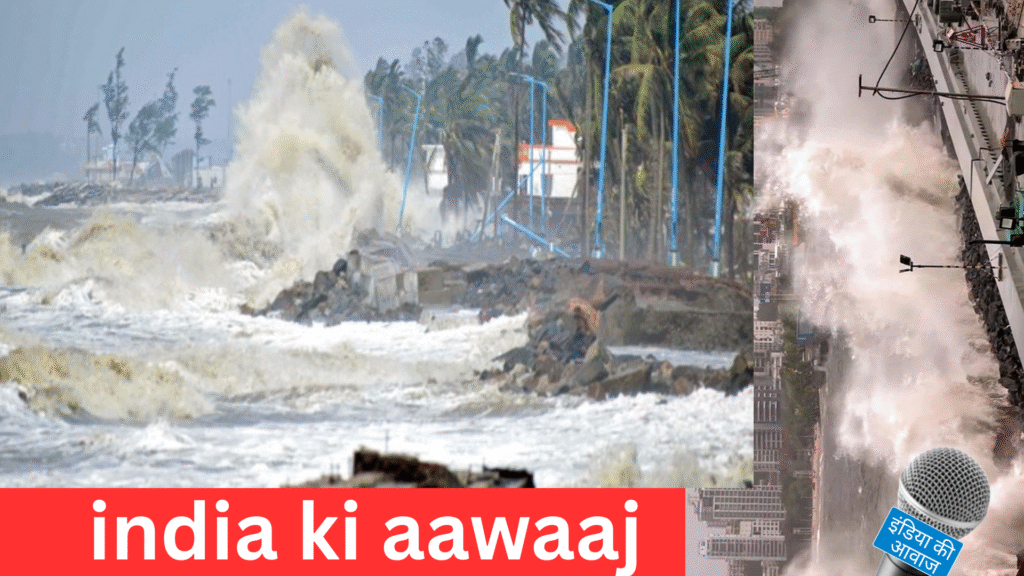
Cyclone Ditwah Affects South Coastal States – Vigilance issued for coastal areas of Andhra Pradesh and Tamil Nadu due to Cyclone Ditwah; warnings have been issued.
Cyclone Ditwah formed on November 26, 2025. It was an active system of the 2025 North Indian Ocean cyclone season. Initially a weak depression, it gradually strengthened into a cyclone.
The storm first wreaked havoc in neighboring Sri Lanka – causing heavy rains, floods, landslides, and other disasters, leaving hundreds dead, many missing, or displaced. Ditwah then recurved into the Bay of Bengal and began moving toward eastern coastal India – particularly the Tamil Nadu-Puducherry coast and southern Andhra Pradesh.
In India, the storm was named “Ditwah/Ditwah/Ditvaah” (with slight variations in newspapers and agencies). As we know, the geographical conditions of the east-coastal states (coastal zones, districts near the sea, rivers, deltaic terrain) make these areas more vulnerable to cyclones, surges, coastal flooding, and strong winds. Ditwah has revived this threat.
Storm’s Projected Path and Alert
- As stated in the India Meteorological Department (IMD) bulletin, Ditwah was centered over the southwest Bay of Bengal and moving north-northwestward. Its speed over the past 24 hours was approximately 5 km/h.
- According to the IMD warning, the storm was expected to move parallel to the northern Tamil Nadu-Puducherry coastline, remaining approximately 25–50 km off the coast during the next 24 hours; although landfall was not expected.
- Meanwhile, a “Red Alert/Orange Alert” was issued for Tamil Nadu, Puducherry, and southern Andhra Pradesh. Coastal districts have been advised to avoid going to the sea, fishing, and boats.
- Additionally, relief and rescue agencies such as the NDMA/State-Level Relief Teams have been activated; NDRF/SDRF teams have been deployed in coastal districts.
Current Situation in Tamil Nadu and Andhra Pradesh
Tamil Nadu
- In Tamil Nadu, the storm has caused heavy to extremely heavy rainfall in several coastal districts, leading to flood-like conditions in some areas.
- Due to the warning, high tides, strong winds, and rough seas and waves continue to occur in some coastal areas.
- Authorities have advised people in coastal areas to evacuate to safer locations and stay away from vulnerable shores.
- Several districts—such as Nagapattinam, Ramanathapuram, Cuddalore, Tiruvarur, Thanjavur, and Pudukkottai—are considered particularly affected.
- The administration has deployed relief teams, patrols, lifeguards, etc. to ensure the safety of people on the seashore or near rivers.
Andhra Pradesh (Southern Part) and Puducherry
- Heavy rainfall is also expected in the coastal districts of Andhra Pradesh, especially the southern part.
- Safety warnings have been issued for marine activities and fishing boats in coastal areas; fishermen have been asked to avoid venturing into the sea.
- Administrative and relief preparations have begun—so that in the event of flooding, coastal inundation, or other disasters, rescue and relief operations can begin immediately.
Potential Social, Economic, and Humanitarian Crisis Challenges
- According to Hindi and regional media reports, flooding has displaced civilians in some areas of Tamil Nadu—people are being shifted to safer locations (shelters, schools, and public buildings).
- Fishermen and coastal businesses affected—the sea is rough, making ship/boat operations impossible; This could impact livelihoods. It could be the beginning of a long-term economic crisis, especially for those who depend on monthly wages or fishing.
- Agriculture and Crops Potentially Affected — If high water levels, coastal flooding, or waterlogging occur, crops in coastal and riverside fields could be submerged. This could not only destroy crops but also jeopardize future food security and farmers’ incomes.
- Infrastructure at Risk — Roads, bridges, river embankments, seawalls, drainage systems, etc. are at risk of damage. This could impact traffic, transportation, electricity, water, communications, markets, etc.
- Public Health and Disaster Management — Waterlogging, flooding, the threat of polluted water, and sea waves could lead to health problems—such as waterborne diseases, skin/health problems, and delayed rescue and relief efforts.
Administrative Measures, Relief and Rescue – Preparedness
- Red/Orange alert issued in Tamil Nadu, Andhra Pradesh, and Puducherry. Coastal areas given highest priority.
- Relief and rescue teams (NDRF/SDRF/State Disaster Management Team) activated in coastal districts—special monitoring and rescue operations underway along the coast, flood-prone areas, and near rivers.
- Local administrations have planned to evacuate people from coastal areas to safer locations—schools, shelters, government buildings—and provide shared shelter, if necessary. People are advised to avoid the coast and vulnerable areas.
- Transportation disruptions—many flights cancelled, rail services altered; information and assistance is being provided to both travelers and the public.
- Disaster management units are preparing helplines, rescue kits/relief materials, and rapid rescue and medical arrangements for the public.
Potential Challenges and Precautions Ahead