

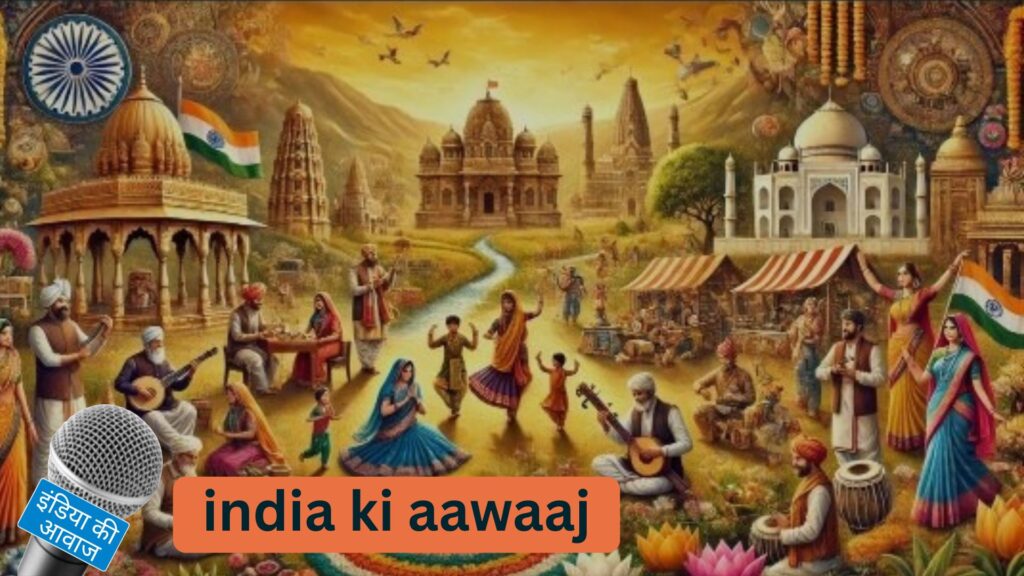
Cultural Identity: India’s Initiatives
Cultural Identity: India’s Initiatives — India is strengthening its role in social, human rights, health, and inclusive development.
New Delhi, December 11 —
India is continuously moving forward in strengthening its cultural identity on the global stage, while also playing a leading role in the areas of social development, human rights, health, and inclusive growth. India’s increasing activism on international forums, innovation in domestic policies, and strong will to tackle socio-economic challenges have established it as a responsible, sensitive, and leading nation in the world.
Strengthening Cultural Identity on Global Platforms
Through its ‘soft power’ diplomacy, India is re-establishing its cultural, civilizational, and spiritual heritage in a new light on the world stage.
- Global success of International Yoga Day
- Growing interest in Ayurveda and traditional medicine
- Increasing international acceptance of Indian languages, festivals, literature, and art
The recent WHO Global Summit on Traditional Medicine reflects India’s growing role in this direction. Experts believe that India’s multicultural identity, diversity, and democratic values can offer the world a balanced, peaceful, and cooperative model.
Strong Initiatives in the Social Sector
The Government of India has accelerated numerous social welfare programs in the last decade.
- Beti Bachao-Beti Padhao (Save the Daughter, Educate the Daughter),
- Swachh Bharat (Clean India),
- Ujjwala Yojana,
- Pradhan Mantri Awas Yojana (Prime Minister’s Housing Scheme),
- National Education Policy 2020,
These schemes have provided a new direction for the lower and weaker sections of society.
These schemes have increased self-reliance among rural women, made educational opportunities more inclusive, and ensured basic amenities on a large scale.
Significantly, community-based development, public participation, and digital transparency are now central to the government’s social policies, which has increased the effectiveness of program implementation.
Human Rights: India’s Strong Global Commitment
India’s recent re-election to the UNHRC reflects the trust placed in India by the global community. India, clarifying its position on this platform, has stated that the protection of human rights should be based on “democratic values and equality enshrined in the Constitution.”
India has conveyed to the world that human rights are not limited to legal frameworks alone, but also include:
- Poverty alleviation,
- Right to education,
- Healthcare,
- Nutrition and clean water,
These fundamental rights are also part of the core spirit of human rights.
India has also taken significant steps towards maintaining a balance between privacy, cybersecurity, and civil liberties in the digital age.
India’s Emerging Leadership Role in the Health Sector
During the COVID-19 pandemic, India demonstrated its role as the ‘Pharmacy of the World’.
- The global Vaccine Maitri initiative,
- Export of affordable medicines,
- Innovation in health research,
- Promotion of the AYUSH Ministry and traditional medicine systems,
All of these have further established India’s health expertise and leadership.
Now, at the upcoming WHO Global Summit, India is preparing to promote an “evidence-based approach” in the field of traditional medicine. This could make India a major hub for health diplomacy.
Inclusive Development: India’s Core Strategy
India’s development policy is based on the principle of ‘Sabka Saath, Sabka Vikas’ (Together with all, Development for all). Continuous efforts are being made to ensure that the benefits of rapid economic growth reach every section of society.
- Digital India has facilitated access to banking, services, and government schemes.
- The Mudra Yojana and Startup India have instilled new confidence in young entrepreneurs.
- Social security measures such as PM-Kisan, Ayushman Bharat, and the e-Shram portal have provided a safety net to millions of families.
India is now moving towards an inclusive economic model with a focus on ‘rural-urban balance’, ‘green development’, and ‘sustainable energy’, aiming to deliver the fruits of development to the last person in society.
Cultural and Developmental Leadership in Global Diplomacy
On international platforms, India is emerging as a country that is not only solving its own problems but also offering solutions to global challenges. * Climate Change
- Global Health
- Cybersecurity
- Gender Equality
- Sustainable Development
India has articulated its voice on these issues in a strong and effective manner. During India’s G20 presidency, the concept of ‘Vasudhaiva Kutumbakam’ (the world is one family) guided the global agenda towards a more humane and collaborative direction.
The Vision of a New India: A Confluence of Identity, Development, and Ethical Leadership
India has emerged on the world stage not merely as an emerging economy, but as a nation with a cultural vision, democratic values, and a human-centric development model. This is the India where:
- A balance of tradition and modernity,
- A blend of development and ethics,
- A synthesis of culture and science,
are laying the foundation for a new world order.
In the current global political landscape, where division, conflict, and mistrust are on the rise, India, with its pluralistic society and universal human values, is offering an alternative, positive path to the world.
Conclusion
The combined impact of social reforms, human rights protection, health leadership, and inclusive development has further strengthened India’s cultural identity. Today, India is not only addressing global challenges…