

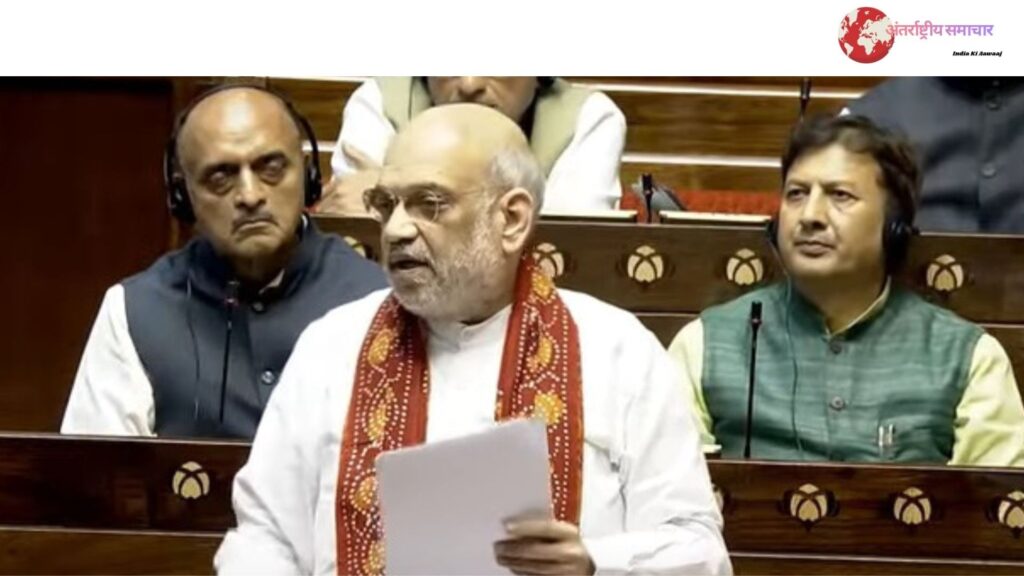
150 Years of ‘Vande Mataram’ — Glory and Debate in Parliament
‘Vande Mataram’ — this song was first published in 1875, and today it holds the status of the national song of India.
To mark the 150th anniversary of this song in 2025, the winter session of Parliament has been dedicated to it. Special discussions were held in the Lok Sabha on Monday (December 8), and a special debate is scheduled in the Rajya Sabha at 1 PM on Tuesday (December 9).
The debate in the Rajya Sabha will be initiated by Union Home Minister Amit Shah. This will be followed by other senior party leaders, and the debate is expected to conclude with remarks by JP Nadda.
The government has stated the objective of this debate: “To highlight the historical background of ‘Vande Mataram’, its contribution to the freedom struggle, and its 150-year journey that has been intertwined with the nation and its consciousness.”
What happened in the Lok Sabha — Commencement and Reactions
On the very first day — December 8 — the Lok Sabha discussed the matter. Narendra Modi inaugurated the debate. He described ‘Vande Mataram’ as a “mantra and slogan” that energized and united the freedom struggle. He said that this 150-year journey symbolizes our history, our struggles, and our national consciousness.
Modi said in the Lok Sabha that ‘Vande Mataram’ was not just a song, but it encapsulated the soul of the movement that liberated the country.
However, during the debate in the Lok Sabha, opposition parties — especially the Indian National Congress — raised questions about whether Parliament’s time should be spent on ‘real issues’ instead of merely debating symbolic songs.
The Congress’s concern was that the House’s time should be spent on issues related to the country’s current development, employment, economic challenges, or social justice, and not merely on symbolism.
‘Vande Mataram’ — History, Controversy, and Modern Discourse
Origin and Significance of the Song
- ‘Vande Mataram’ was originally written in the 1870s and was first included in the novel Anandamath, published in 1882. * This song became a symbol of national awakening during the freedom movement – in 1905, it was first widely adopted as an anthem of the Swadeshi movement.
- On January 24, 1950, the Constituent Assembly officially adopted ‘Vande Mataram’ as the national song, giving it a status almost equal to the national anthem.
Controversy — Identity, Religion, and Politics
Although ‘Vande Mataram’ has been a symbol of patriotism, some of its verses were inspired by religious themes – deities and Hindu symbols.
Because of this, in 1937, the then Congress-dominated committee decided to remove or limit those parts of the song to respect the sentiments of various religious and communal groups.
Since then, ‘Vande Mataram’ has been the subject of periodic debate – while it is considered a symbol of national unity, some socio-cultural groups have objected to what they perceive as an attempt to forcibly link it to secularism.
Even today – 150 years later – the same dilemma persists: on one side, pride, national identity, historical respect; on the other – secularism, social inclusion, and sensitivity.
The Current Context of this Debate – Why the Discussion Again in 2025?
This year’s 150th-anniversary celebration, and the decision to allocate special time for this topic in Parliament, underscores the fact that ‘Vande Mataram’ is no longer just a song – it has become a mirror of India’s political and cultural journey from the 19th to the 21st century.
The government views it as a historical symbol that can connect new generations to the struggle for independence, the country’s culture, and the spirit of unity and the constitution.
On the other hand, the opposition and several social organizations argue that such debates could be a new form of vote-bank politics, symbolic politics, or communal messaging – especially when these debates are taking place at a time when many sensitive issues (economic, social, religious, and communal) are in the spotlight. Therefore, the debate scheduled in the Rajya Sabha today is not being viewed merely as a formality or a ceremonial event—but rather as a significant political turning point that could redefine established boundaries, identity politics, and national values.
Rajya Sabha Debate — Expectations and Possibilities
- Amit Shah, the first speaker who will initiate the debate, is expected to reiterate the historical, cultural, and national significance of ‘Vande Mataram’. He will likely explain how this song is not just a song, but a symbol of India’s freedom, unity, and diversity.
- Other BJP leaders: Senior leaders (such as Radhamohan Das Agarwal, Laxman, Ghanshyam Tiwari, Satpal Sharma) will likely continue the debate, emphasizing that ‘Vande Mataram’ should not only be respected but actively embraced in life and practice.
- In conclusion, JP Nadda, who is expected to conclude the debate, will highlight the 150-year journey of the national song, its modern relevance, and its importance for future generations.
Challenges and Sensitivities
This debate is as symbolic as it is sensitive. Some of the challenges may include:
- Religious/Communal Sentiments — As seen in history, some parts of ‘Vande Mataram’ mention deities, which has caused controversy in the past. Therefore, religious and cultural sensitivity is required during this debate.
- Symbolic vs. Practical Debate — Some critics