

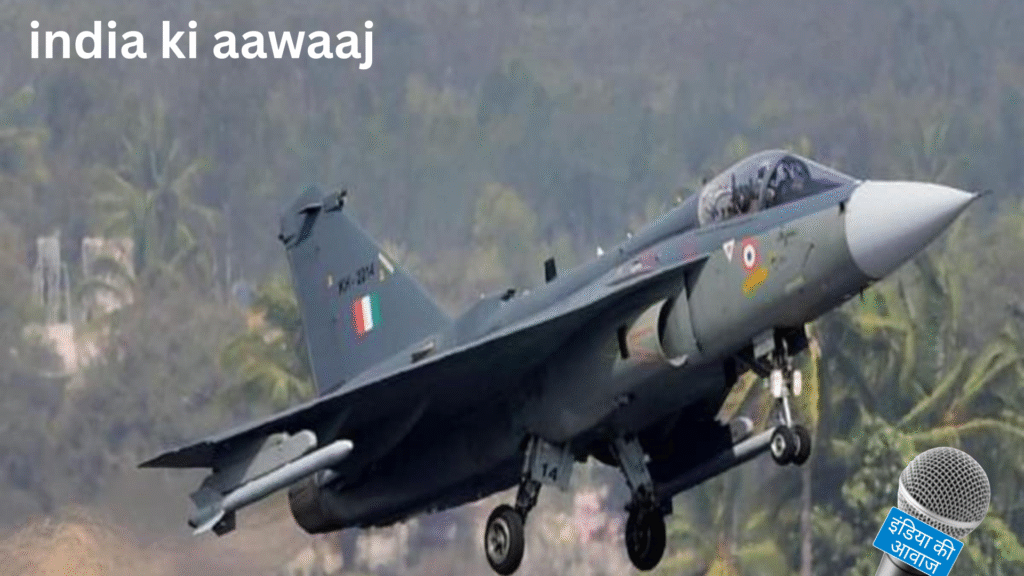
Indian Air Force and Relief Agencies, Sri Lanka-India Cooperation in Assisting Cyclone Ditwah Affected
Indian Air Force and Relief Agencies, Sri Lanka-India Cooperation in Assisting Cyclone Ditwah Affected – India launched relief operations in Sri Lanka; the Air Force and National Disaster Response Force (NDRF) are active.
Cyclone Ditwah: Disaster and Emergency Situation
Cyclone Ditwah caused widespread devastation in Sri Lanka on November 28–29, 2025. Heavy rains, floods, and landslides affected many areas; dam bursts, rivers overflowed, flooding coastal and inland areas, and house collapses occurred.
According to the Central Disaster Management Center (DMC), the death toll has exceeded 200, and hundreds are missing. The number of affected is estimated to be in the millions, and many families have been rendered homeless.
A state of emergency has been declared, while roads, bridges, electricity, and communication systems have been disrupted in many places. International and local efforts have begun for relief, rescue, and rehabilitation.
India’s Response: Operation Sagar Bandhu Launched
Seeing the devastation, India immediately responded with relief efforts. Operation Sagar Bandhu, involving multiple agencies including the IAF, NDRF, and Indian Navy, was launched on the night of November 28–29.
The IAF deployed large C-130J and IL-76 transport aircraft from Hindon Air Base, delivering the first 21 tons of relief material to Colombo, Sri Lanka. This included rations, tents, tarpaulins, blankets, hygiene kits, and ready-to-eat meals.
Two specialized NDRF urban search-and-rescue teams—comprising approximately 80 personnel and four dogs—were also dispatched via IL-76s. They were equipped with inflatable boats, hydraulic cutting/breaching tools, medical kits, and communication equipment, essential for rescue operations in flooded, debris-ridden, and collapsed structures.
In addition, Indian Navy warships were also already stationed in Sri Lanka. INS Vikrant and INS Udaygiri also sent relief supplies—rations, tents, etc.—to Sri Lanka.
IAF and Indian Navy helicopters (Mi-17, Chetak) were also deployed to expedite airlift, rescue, and relief operations in flood-affected areas.
India’s assistance was not limited to supplies—the IAF also assisted in the evacuation of many stranded Indian citizens and others.
Relief, Rescue, and Rehabilitation of Civilians—Ground Operations
NDRF teams, IAF helicopters and aircraft, and naval aircraft and ships are jointly conducting ground-level rescue operations. Efforts are underway to locate, evacuate, and provide basic necessities—rations, water, tents, and medicine—to those stranded in flood- and landslide-affected areas.
A 24×7 emergency helpdesk has been set up at Colombo’s Bandaranaike International Airport, providing food, water, information, and safe evacuation to stranded Indian citizens.
India has so far sent approximately 27 tons of relief material—by air and sea—and further aid is underway.
Efforts are underway to provide first aid, protection, and rehabilitation to the injured, the destitute, the elderly, and children. Relief efforts are being coordinated in coordination with the local administration, Sri Lankan authorities, Indian teams, and other international organizations.
Evacuation and Repatriation of Citizens
The IAF began evacuating stranded Indian citizens from Sri Lanka through special flights—hundreds were brought safely to India in the first day itself.
For example, an IL-76 aircraft arrived in Thiruvananthapuram on Sunday evening, carrying 237 stranded Keralites.
In addition, other sorties airlifted passengers to Delhi and other cities. In addition to many Indians, some foreign nationals and Sri Lankan locals were also rescued.
The Indian High Commission has set up a help desk and a WhatsApp helpline number for stranded individuals to access assistance and information.
Is this a new chapter in India-Sri Lanka cooperation? — Challenges, appreciation, and the way forward
An example of cooperation
- Operation Sagar Bandhu demonstrated that India can provide relief in regional disasters not only to neighboring countries but also to friendly neighboring countries.
- The joint, swift, and coordinated efforts of the three branches—the IAF, NDRF, and Navy—send a strong message that humanity takes precedence over the Constitution in times of disaster.
- India played the role of a ‘First Responder’ by simultaneously sending relief supplies, rescue teams, civilian evacuations, and primary care.
Challenges and complexities
- Flooding, landslides, road blockages, and power and water outages in the affected areas of Sri Lanka are making relief and rescue operations extremely difficult.
- The number of people is in the millions; debris, submerged areas, collapsed structures—all of these are difficult to deal with.
- Time, resources, and the unpredictability of weather—continue to pose challenges to relief efforts.
What’s Next—Suggestions and Needs
- Relief operations should be more comprehensive—focusing on food, water, medicine, medical care, tents, infection control, and rehabilitation.
- Rehabilitation of those affected—so that they are not just rescued but can regain their homes, health, and livelihoods.
Conclusion
Cyclone Ditwah has severely affected Sri Lanka—floods, landslides, millions affected, hundreds dead and missing. Amid this crisis, India sent assistance not only on a face-to-face basis, but also on the basis of humanity and mutual solidarity. Operation Sagar Bandhu involved the IAF, NDRF, Navy, and other agencies.