

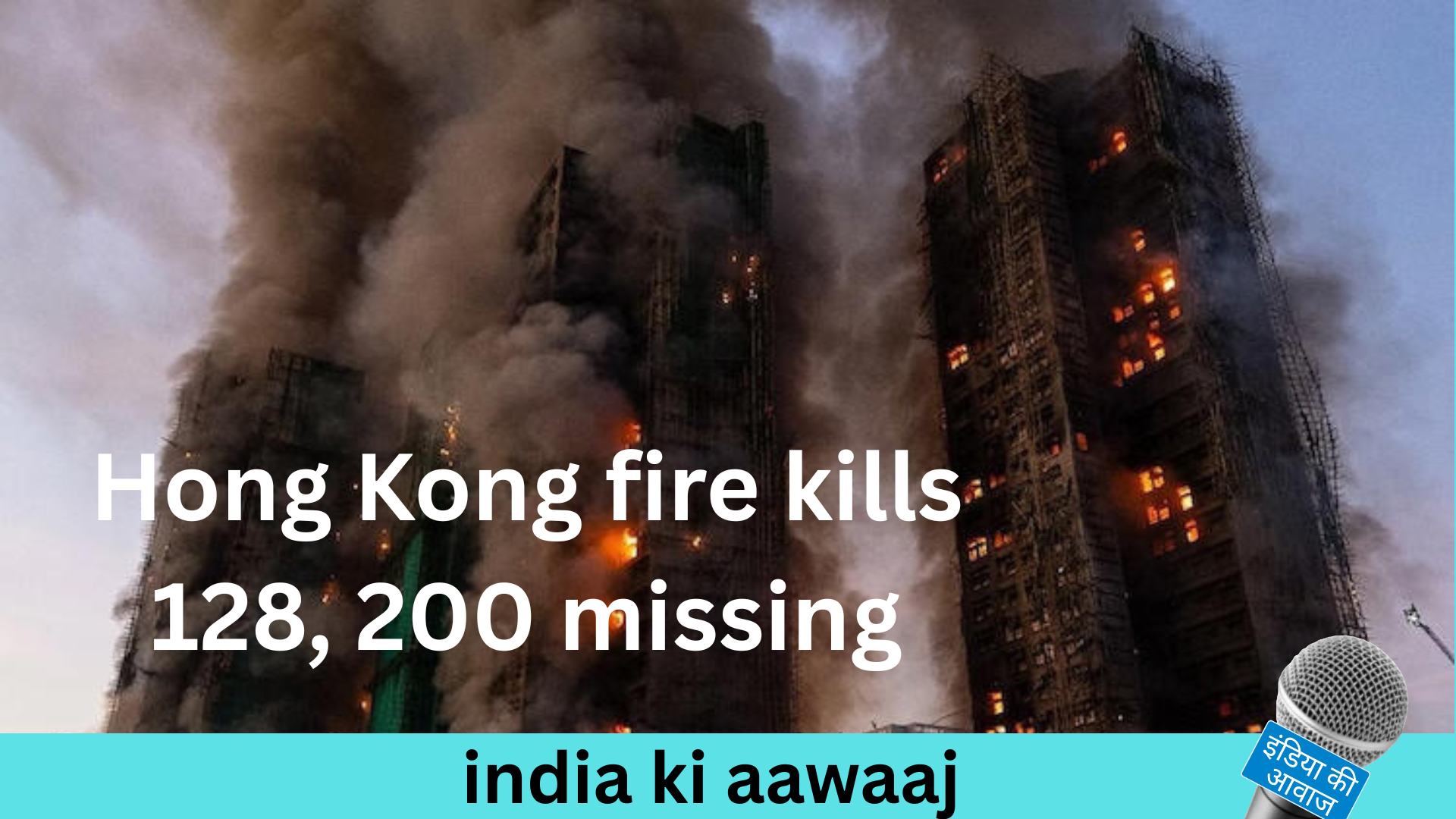
Hong Kong Fire – Death toll reaches 128, over 200 people still missing
Incident: What happened
Day and time: The fire began at 2:51 pm (local time) on November 26, 2025.
Location: The Wang Fuk Court residential complex in Hong Kong’s Tai Po district—consisting of eight 32-story towers.
Situation: These buildings were undergoing renovation—the exteriors were clad in bamboo scaffolding and green mesh.
How the fire spread: Initial warnings suggested the fire may have started from the bamboo scaffolding and mesh netting, and this, along with foam boards/plastic netting covering the windows—which were reported to be highly flammable—helped the fire spread rapidly to other buildings.
This caused the fire to engulf seven (out of a total of eight) towers, making it a massive high-rise fire.
Deaths, Missing, Rescue Expected
Death toll: As of November 28, 2025, authorities confirmed that at least 128 people had died in the fire.
Missing/Unaccounted for: Nearly 200 people are still reported missing—authorities have warned that more bodies are likely to be found once police fully enter the building.
Injured and Rescued: At least 79 people were injured, including firefighters. Additionally, several others—including domestic workers—are now reported safe.
Relief and Rescue Operations: Firefighters, ambulances, and rescue services deployed extensively to respond to the disaster. The rescue and relief operation expended significant effort—but the rapidly spreading fire, smoke, collapsing walls, and high heat made the process extremely difficult.
On November 28, officials announced that “initial rescue efforts” had been terminated as the fire department declared the fire “almost extinguished.”
Causes, Negligence, and Possible Causes
Scene investigations and preliminary investigations have revealed several key causes:
Flammable construction materials: Foam board/plastic netting placed outside windows, allowing the fire to spread rapidly inside.
Green nets with bamboo scaffolding: Used during renovation work, a traditional method but dangerous if the fire spread.
Fire alarm/security system failure: Officials admitted that the fire alarm system throughout the complex did not function—meaning that many people did not receive timely warnings when the fire broke out.
Neglect of Regulations, Oversight, and Construction Safety: Initial investigations revealed doubts about the safety of the materials used in the renovation—fireproofing and certification.
Based on this, the intensity and extent of the fire are being considered a serious regulatory and safety lapse, not just an accident.
Government Action, Legal Initiatives, and Responsibilities
Arrests: Police initially arrested three individuals—two company directors and an engineering consultant—on suspicion of “possible manslaughter.”
Subsequently, the Independent Commission Against Corruption (ICAC) launched a further investigation and detained eight more individuals—including contractors, workers, intermediaries, etc.
Full Investigation and Task Force: The ICAC has formed a special team to investigate any instances of corruption or neglect of safety standards in the renovation project.
Safety Review: Local authorities have announced that the floors, netting, and construction materials of housing estates undergoing renovation across Hong Kong will be reviewed to prevent future tragedies.
Relief Package for Victims: The government has announced compensation and financial assistance to help victims and their families. Initial reports—some media reports—mentioned “condolence payments” and emergency relief.
Social-Humanitarian Initiatives, Relief, and Rehabilitation
Rescue-Assistance and Relief Camps: Following the fire, many residents were immediately evacuated and placed in temporary shelters—such as community halls, gyms, churches—where food, clothing, water, and first aid were provided.
Voluntary and Civic Aid: Local civic groups, NGOs, firefighters, and the public joined forces in relief efforts—helping those left behind after the disaster, gathering information about missing persons, distributing food and water, and providing temporary shelter, etc.
Media and Public Support: This tragedy attracted widespread attention not only in Hong Kong but also internationally—numerous international agencies, media houses, social organizations, and private donors offered assistance. Furthermore, the incident has sparked widespread debate on construction safety, labor rights, housing policy, and worker conditions. (Some reports question high-rise safety standards, renovation policies, and the weaknesses of labor and social security systems.)
Resettlement and Challenges Ahead: Many of the people who once lived in their homes and apartments are now homeless. They will need new housing, work, economic and social support—everything. Furthermore, locating missing people and missing workers who have not yet been found by family or acquaintances is a significant challenge.
Widening Impacts, Safety Warnings, and the Future
This fire is not just an accident—it’s a warning, Hong Kong.