

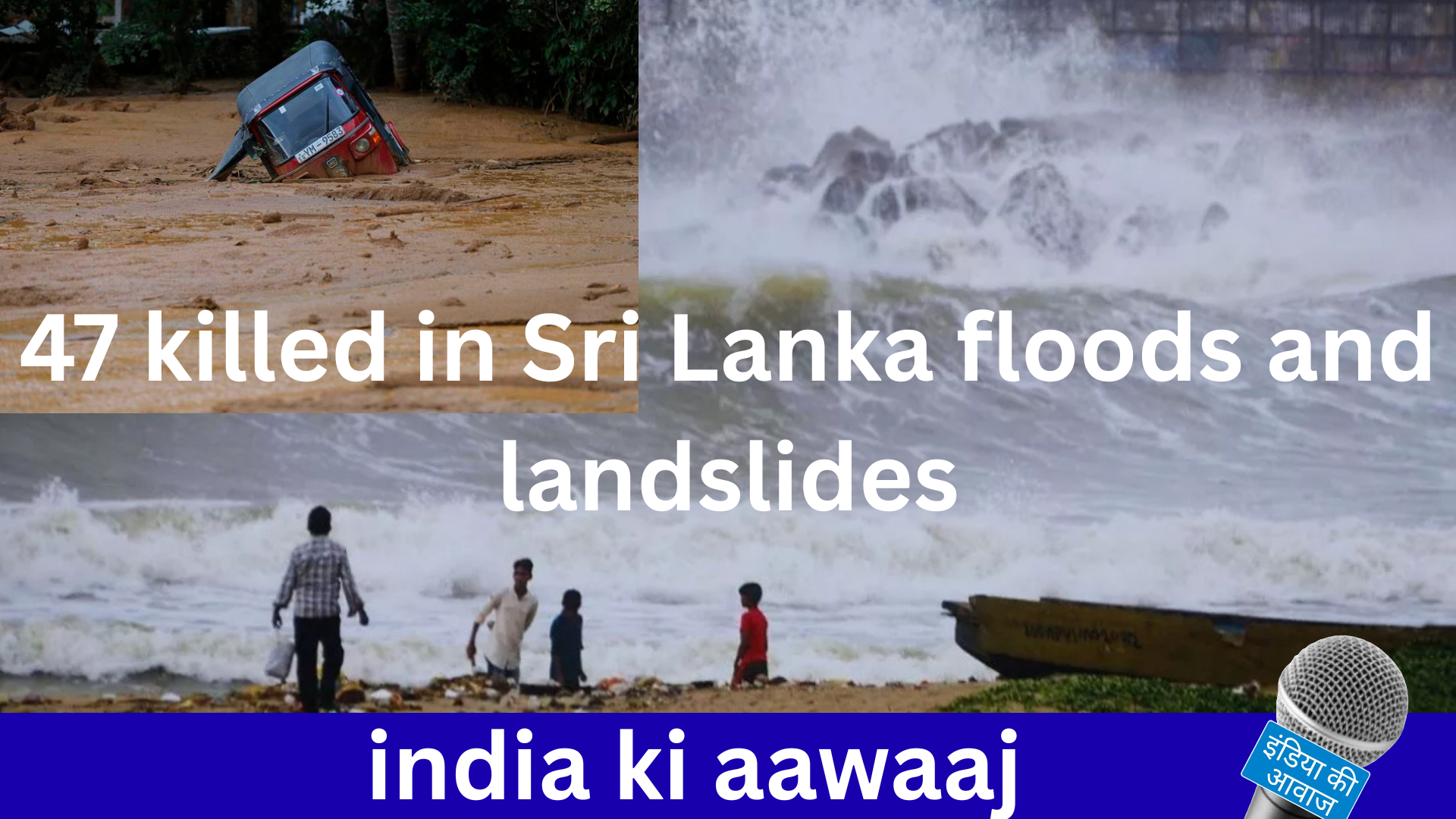
Floods and landslides in Sri Lanka: 47 dead, relief and rescue operations underway
Sri Lanka is currently facing a major natural disaster. Cyclone Ditwah, which struck in late 2025, has caused one of the worst floods and landslides in decades in many parts of the country.
Devastation—Impact on Life, Property, and Livelihood
A total of 47 people have died so far.
In addition, a large number of people have been injured, and hundreds of homes, paths, bridges, and roads have been damaged or disrupted by floods and debris.
The total number of people affected is estimated at a high level—approximately 5,893 people from 1,729 households have been affected by this disaster.
The most devastated districts were hilly and tea-garden areas like Badulla and Nuwara Eliya, where landslides were most frequent.
Relief and Rescue — Government and Administration Actions
Recognizing the severity of the disaster, the Sri Lankan administration immediately launched a rescue operation. Rescue teams, the army, police, and other disaster management agencies are active in the landslide-affected areas. ([Anadolu Ajansı][2])
In many locations, people are being evacuated to safer areas by helicopters and boats—especially those trapped by floods or landslides.
Temporary shelters have been set up for affected families. People living in houses affected by floods and debris are taking shelter in these facilities.
The administration has also appealed to the public to heed government warnings seriously, avoid risk areas, and move to safer locations as soon as possible.
The Indian High Commission in Sri Lanka (High Commission of India, Colombo) has also expressed condolences to the affected people and expressed solidarity with the Sri Lankan people.
Current Challenges and Future Concerns
Heavy rains and landslides are continuing—many areas remain unstable. The potential for further devastation remains high.
Damage from floods and debris is widespread—waterways blocked, debris on main roads and railway tracks, and bridges collapsed—making relief operations and public movement difficult.
Logistics, food, water, medicine, and health security for those living in temporary shelters pose significant challenges.
Awareness needed—People living in vulnerable areas must be provided with adequate information and resources for relocation, relief, and rehabilitation.
International/Regional Impact—Caution for neighboring countries, including India
Since this disaster is natural and linked to regional climate change, the risk of disasters has increased regionally, including in neighboring countries—making it necessary for India to be vigilant.
The offer of condolences and assistance by the High Commission of India demonstrates the importance of cooperation and solidarity at the humanitarian level—especially during natural disasters.
Conclusion
The current flood and landslide disaster in Sri Lanka has taken a very serious turn – with over 47 people dead, dozens missing, and widespread socio-economic devastation. Despite the tireless efforts of rescue teams, massive relief, rehabilitation, and reconstruction are still required. The situation appears to be under control now, but vigilance, rehabilitation plans, and sensitization are crucial for the future.