

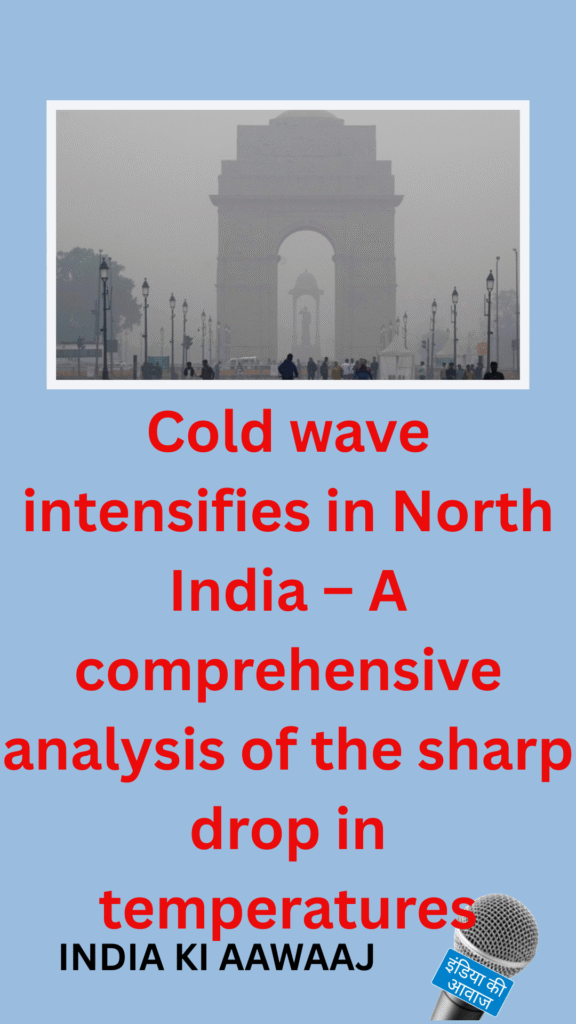
Cold wave intensifies in North India – A comprehensive analysis of the sharp drop in temperatures
The cold wave is currently intensifying in North India. According to Amar Ujala and other major weather reports, temperatures are steadily dropping in many parts of Kashmir, Punjab, Himachal Pradesh, Haryana, Delhi NCR, and Uttar Pradesh. Cold wave conditions have developed in many areas, and the Meteorological Department has warned of even more severe cold in the coming days. Every year, winter in North India has its own unique character, but this year, the initial phase of cold is expected to be more intense.
In this detailed analysis, we will discuss the causes of the drop in temperatures, its impact, the challenges faced by the people, the government’s preparations, and the forecast for the coming days.
Main Reasons for the Temperature Drop
It is normal for cold to intensify rapidly in North India from the last week of November to mid-December, but this year, the drop in temperatures has been exacerbated by a few key factors:
(a) The Impact of Western Disturbances
A series of Western Disturbances are becoming active in Kashmir and Himachal Pradesh.
Due to:
Heavy snowfall in the higher elevations
Rain in the lower elevations
And increased cold winds in the plains
Northwesterly winds blowing into North India after snowfall play a significant role in rapidly lowering temperatures.
(b) Clear skies and radiation cooling
Clear skies at night cause the ground temperature to drop rapidly.
Despite sunshine during the day, night temperatures drop significantly.
(c) Record snowfall in the mountains
Many areas received more snowfall than usual in November, making the air coming into the plains even colder.
Which states are experiencing the most severe cold?
According to Amar Ujala’s report, the following states are experiencing the most severe cold:
Kashmir
Minimum temperatures below zero have been recorded in Srinagar, Gulmarg, and Pahalgam.
Water in Dal Lake is freezing.
Roads have become slippery in many areas.
Punjab
Temperatures in Amritsar, Gurdaspur, and Pathankot are 3–4 degrees below normal.
Dense fog has started forming in the mornings and evenings.
Haryana
Minimum temperatures in Hisar, Bhiwani, and Karnal are around 5 degrees.
Agricultural activities are affected, especially vegetable and potato crops, and the risk of frost has increased.
Delhi NCR
Minimum temperatures in Delhi are between 7–9 degrees.
Pollution has also increased due to low wind speeds.
Uttar Pradesh
Meerut, Kannauj, Bareilly, Saharanpur, and Gorakhpur are experiencing the dual effects of cold and fog.
Temperatures have dropped more rapidly than last year.
Cold impacts on normal life
(a) Health impacts
The severe cold has the greatest impact on children, the elderly, and those with pre-existing medical conditions.
The risk of cold, cough, pneumonia, and hypothermia increases.
(b) Impact on Transportation
Due to Fog:
Trains are running late
The risk of road accidents is increasing
Flight reschedules are also possible
(c) Difficulties in Daily Life
School-going children are most affected by the cold
Difficulties for laborers working in the early evening have increased
Markets are becoming increasingly silent in the evening
Cold Impact on Farmers
Farmers in North India cultivate wheat, mustard, and vegetables in November and December.
Extreme Cold and Frost:
May damage vegetables like potatoes, onions, and tomatoes
Early growth of the wheat crop may be affected
There is also a direct impact on animal husbandry
Agricultural scientists are advising farmers to:
Perform light irrigation in fields
Embrace covering techniques to protect crops from frost
Government and Administration Preparations
In view of the increasing cold, governments in many states have become active.
Major ongoing actions:
Arrangement of night shelters for the needy
Special fog patrols for road safety
Ordering school holidays or rescheduling
Activation of disease control programs
Providing blankets and warm clothing to poor families
The Delhi and Punjab governments have issued special cold wave alerts.
Weather Forecast for the Coming Days
According to the Meteorological Department (IMD):
Temperatures may drop further in the next 5–6 days
Cold will peak from early December
Northwesterly winds will become stronger
Cold wave conditions may develop in several states
Rajasthan, Punjab, Haryana, and Uttar Pradesh are particularly likely to experience heavy downpours.
How to avoid the intense cold?
Important Precautions:
Wear warm layers of clothing
Keep your head, ears, and feet covered
Avoid going outside during cold winds
Elderly and sick people should exercise special caution
Do not use smoke-emitting heaters at home
Eat nutritious and warm food
Conclusion
The cold wave in North India is only just beginning, but its impact is rapidly increasing. The sudden drop in temperatures has not only disrupted life but also increased challenges in the health, transportation, and agriculture sectors. Governments are vigilant, but individuals must also take personal precautions.
The cold may intensify in the coming days, so caution is the key to safety.
Subscribe to the channel for daily updates